hidden europe 27

Berlin connections: the Moscow to Paris express

by Nicky Gardner

Picture above: The Moscow to Paris train arriving at Berlin's main station (Hauptbahnhof) (photo © hidden europe).

Summary

On long train journeys across Europe, it is always worth checking the timetable to see if your journey includes any abnormally long halts. Passengers travelling on the direct Moscow to Paris train, for example, linger for eleven hours in Berlin.

At eight o’clock on a summer weekday morning, the railway platform at Erkner is full of folk waiting for the train into Berlin. It is an unremarkable sight, one that might be replicated at commuter towns around Europe. If all has gone according to plan, the night sleeper from Russia rolls through Erkner just as the distant church bells are chiming the hour. It does not stop. This is one of those long snakes of a train, with an exotic medley of carriages that, as they rumble slowly through Erkner, are nearing the end of a long journey across Europe. Yet for just one carriage in the train, the thrice weekly through sleeping car from Moscow to Paris, Berlin is just a way station along the route.

Passengers making the trip right through from Moscow to Paris have two full days and nights aboard the train, leaving Belorusskaya station in the Russian capital at eight in the morning, and rumbling into Paris Est around 9.38 am two days later. It is a train that travellers choose for its convenience rather than its speed. There are faster ways of travelling from Moscow to Paris, even by train. But its sedate style is its appeal. And nowhere is that relaxed schedule more evident than in the meandering journey that the Moscow to Paris sleeper enjoys in and around Berlin.

Related articleFull text online

Conflicts of interest: Mining and World Heritage

UNESCO's World Heritage List includes many citations which showcase former mining activities. The extractive industries have led to the development of some of Europe's most distinctive cultural landscapes. But the recent addition of a gold mining site in Romania to the list sparks tensions between conservation and economic interests.

Related blog post

Stories in timber and stone - Europe’s Old Towns

For many travellers the handsome squares in the heart of major cities - throughout central Europe but also more widely - capture the experience of being away from home. These squares, often distinguished by cobblestones and half-timbered buildings, are the focus of the tourism circuit. In some cases, these squares are reconstructions of originals destroyed in conflict, so raising interesting questions of authenticity.

Related articleFull text online

Poznan blues

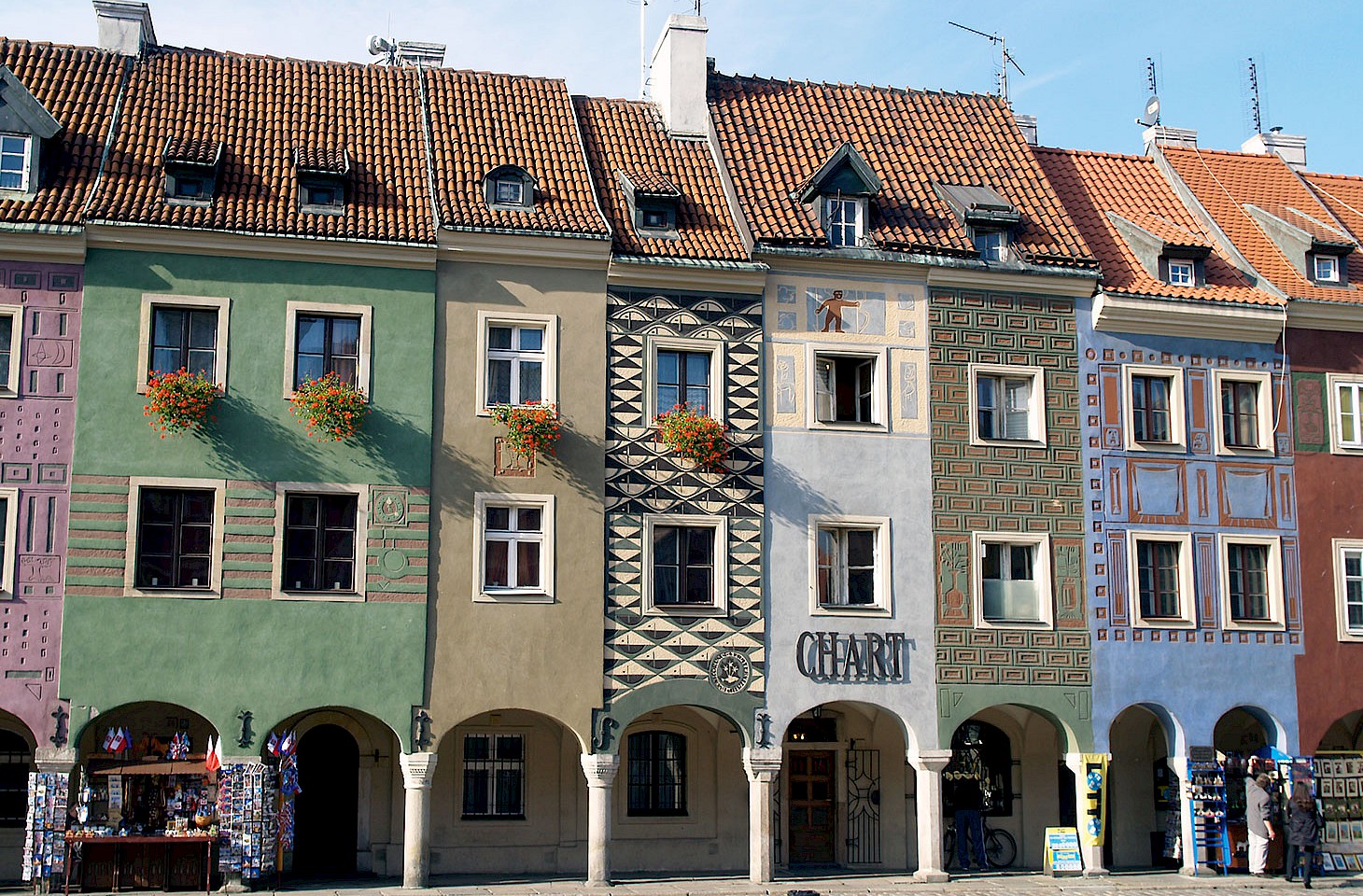
Europe's city squares are being radically reshaped by the arrival of mass tourism. Thus far, Poznan's beautiful central square has resisted the pressure for change. It remains essentially a place for the locals. But change is surely in the offing.