

hidden europe 38

Russia’s wooden churches

Summary

Many books cross our desks. This year, one particular volume has struck us more than any other. Wooden Churches: Travelling in the Russian North is a remarkable volume. Superb photography by Richard Davies complemented by evocative prose by Matilda Moreton make for a winning combination. The book is truly an object to treasure, just as the churches it describes are aspects of Europe's heritage that should be treasured.

It took us a while to twig that the Richard Davies who so brilliantly photographs the finest modern architecture in western Europe is the same Richard Davies who runs a blog devoted to wooden buildings in Russia. Holy Rus’ Log Blog is how Richard dubs his occasional online musings on the woeful state of fragile Orthodox churches in remote areas of north-west Russia.

We have never met Richard Davies. But we would like to. We have long admired the way his lens captures the boldest of modern buildings — like his iconic shots of Jan Kaplický’s daring curves of the Selfridges complex in Birmingham. Daring is perhaps the key word. We sense that Richard is drawn to buildings that push at the boundaries. He likes architecture of extremes. So it was a delight recently to discover that Richard shares our enthusiasm for rural Russia. And that, as a sideline to his mainstream photography of western cityscapes, Richard Davies has photographed the wooden churches of northern Russia.

The result is a truly magnificent book called Wooden Churches: Travelling in the Russian North. The book itself is as much an object of beauty as the churches it depicts. The volume showcases Richard Davies’ images of places made sacred by the patient faith of others — the faith and skill of architects and builders who dared to push timber architecture to extremes, and the faith of the generations of villagers who have worshipped in those churches.

The wooden churches in the region south of the White Sea are often the most conspicuous buildings in largely barren and inhospitable landscapes.
This is just an excerpt. The full text of this article is not yet available to members with online access to hidden europe. Of course you can read the full article in the print edition of hidden europe 38.
Related articleFull text online

Beyond the Small Homeland

Mishar Tatars and Lipka Tatars have been quick to assimilate into the communities to which they migrated. We discover how they moved through the Baltic region, settling in Lithuania and Finland, with some moving on to Sweden and the United States of America.

Related articleFull text online

Eastern Crescent: Islam in the Baltic region

Lipka Tatars settled in the rural region south of Vilnius in the 14th century, and their descendants still reside in villages in north-east Poland, western Belarus and southern Lithuania. They are a Muslim minority in a region of Europe which is often incorrectly perceived as being homogeneously Christian. We report on Baltic Islam.

Related articleFull text online

Follow the dove

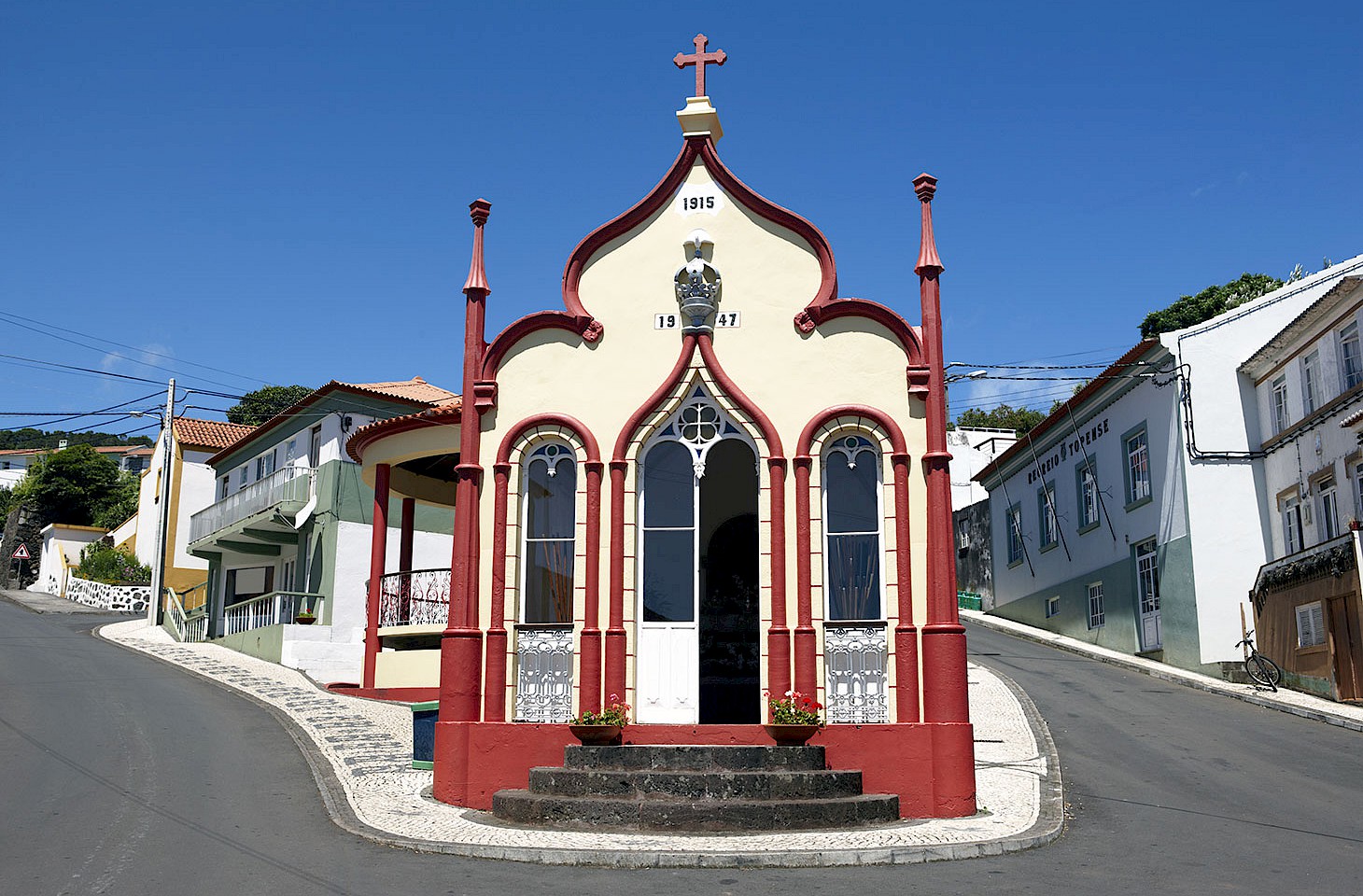
Look for the tell-tale Pentecostal dove that marks out the small chapels dedicated to the Holy Spirit. They are found across the Azores, each chapel the hub of a social network that underpins Azorean Catholicism.